Why I joined Aurox
I didn't think a machine that weeds a soybean or corn field was a real thing. Then I found out one was being built an hour from where I live. Here is what convinced me, what I do, and the honest part about how far we still have to go.
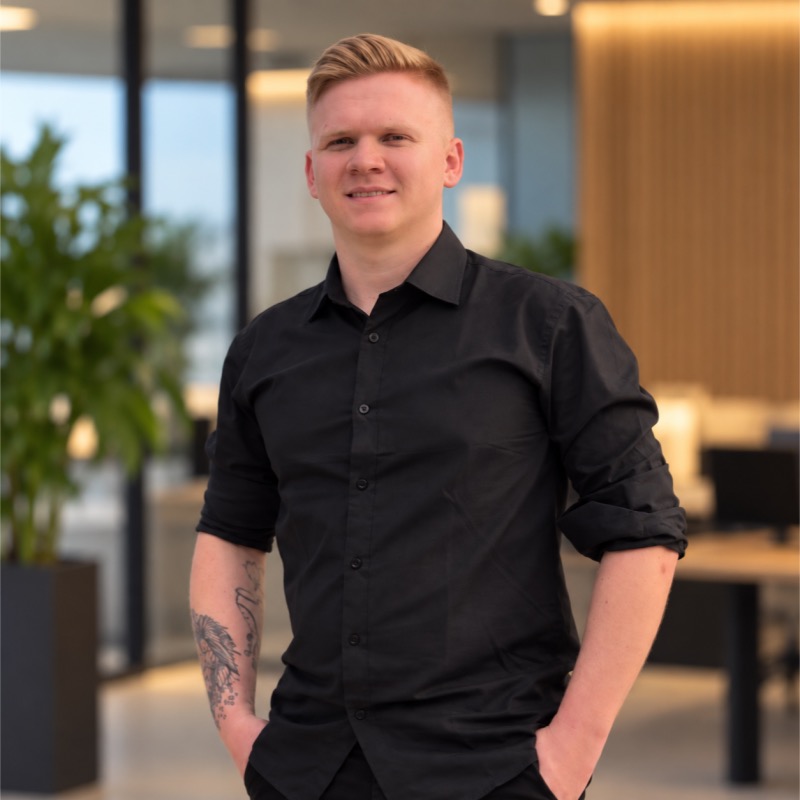
I didn't think a machine that weeds a soybean or corn field was a real thing.
The concept I understood fine. What I didn't believe was that it was something a person could walk up to, touch, break, and then fix. Agricultural robots were videos from other countries. Filmed on fields that look nothing like ours, narrated by someone who never once explains what the machine does when the ground is soaked and the work still has to get done that day.
Then I found out one was being built ten minutes from where I live.
The first conversation
I talked to Lucas, who founded Aurox and runs it. That conversation is where it stopped being an idea to me.
I walked in curious. I walked out understanding the size of what was in front of us, which is not a comfortable feeling and I don't think it's supposed to be. He wasn't selling me anything. He was explaining problems that hadn't been solved yet, the same ones he lays out in why he's betting ten years on weeds.
What convinced me wasn't a slide deck. It was the workshop.
There's a difference between a company that talks about a machine and a company where the machine is sitting in front of you half-assembled, with two people arguing about whether the camera should turn with the wheel or stay bolted to the chassis. You can fake the first one. The second one is much harder.
What the problem actually is
I want to be precise here, because "robot that pulls weeds" sounds like a convenience, and it isn't.
Brazilian row crops are losing the chemical fight. Buva, sourgrass, and others have built up resistance to glyphosate, to ALS inhibitors, to 2,4-D. A field without much resistance pressure spends somewhere around R$120 per hectare per cycle on herbicide and application. A field that's really infested spends R$300 to R$450. More passes, stronger mixes, and the residual doesn't hold as long.
Meanwhile almost nothing new is coming. Very few genuinely new modes of action have been registered in twenty years. What the market keeps offering is another product, more expensive, that works slightly worse than the one before it.
A machine that pulls the plant out of the ground doesn't care whether that plant is resistant. Resistance is a property of chemistry. The idea here is to stop having the argument at all.
That's what I signed up for.
What I do
I'm not designing the traction system and I'm not writing the perception model. My work is closer to the ground. Most of it is going out and collecting the reality that everything else is built on top of.
I fly the drone for field surveys. Photogrammetric flights over the areas we work, which turn into orthomosaics, elevation models, and slope maps. That's what tells us where the robot can go and where the terrain says no, before anybody drives a machine somewhere it shouldn't be.
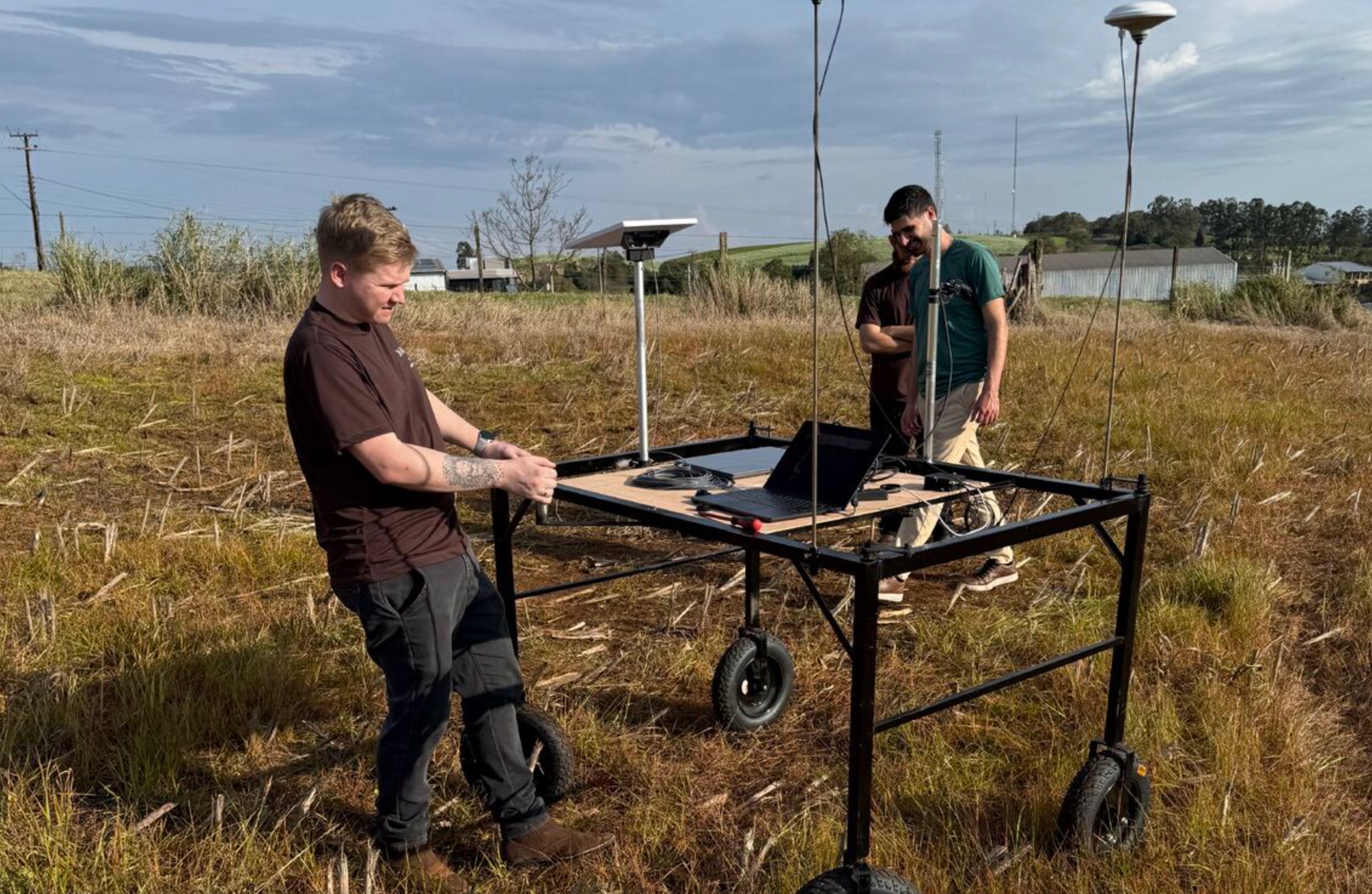
I drive the test cart to collect images. The perception system has to recognise crop and weed at the height, the angle, and the light the robot will actually have. Public datasets don't give you that. They're greenhouse photos shot from directly above, or drone imagery from three metres up. Neither one looks anything like what a camera 1.28 m off the ground sees at an angle. So we go make our own.
Then I work on those images. Processing what comes off the cameras, sorting it, testing what the system does with it.
And I help Samuel in the workshop and Lucas with the administrative side. In a company this size that isn't a footnote. There's nobody to hand it to.
What I've learned so far
The thing that surprised me is how much of this job is finding out you were wrong.
I've watched the perception system fail in ways nobody predicted from a chair. A vegetation filter that marked 94% of the frame as plant, bare soil included. A row detector that measured the same field at 52 pixels between rows on one attempt and 245 on another. A model trained on greenhouse photos that looked at a tree fifty metres away and called it buva, 58% confident.
Not one of those was caught by thinking about it. They were caught by going out, collecting real images, and measuring what actually happened.
I didn't expect that part to be the interesting part. It is. Whatever separates a system that works in a demo from one that works in a field, it isn't enthusiasm. It's how many times somebody went and looked.
Why here
Aurox got me from the first contact. A company putting down roots in a town close to mine, working on something that goes well beyond it. And it isn't just a robot. It's a robot that brings us back to how this used to be done, before the answer to everything became another jug of chemical. The most effective way I've seen of getting the inços (what we call weeds down here in the south) out of a field.
I'll give this everything I have until it's done.
Now the honest part. The machine doesn't exist yet in the form it needs to. The perception system isn't good enough. Row detection loses the line in about a third of the footage we've recorded so far.
I know all of that because I'm one of the people measuring it.
I joined anyway. I'd do it again.
← Todos os posts